-
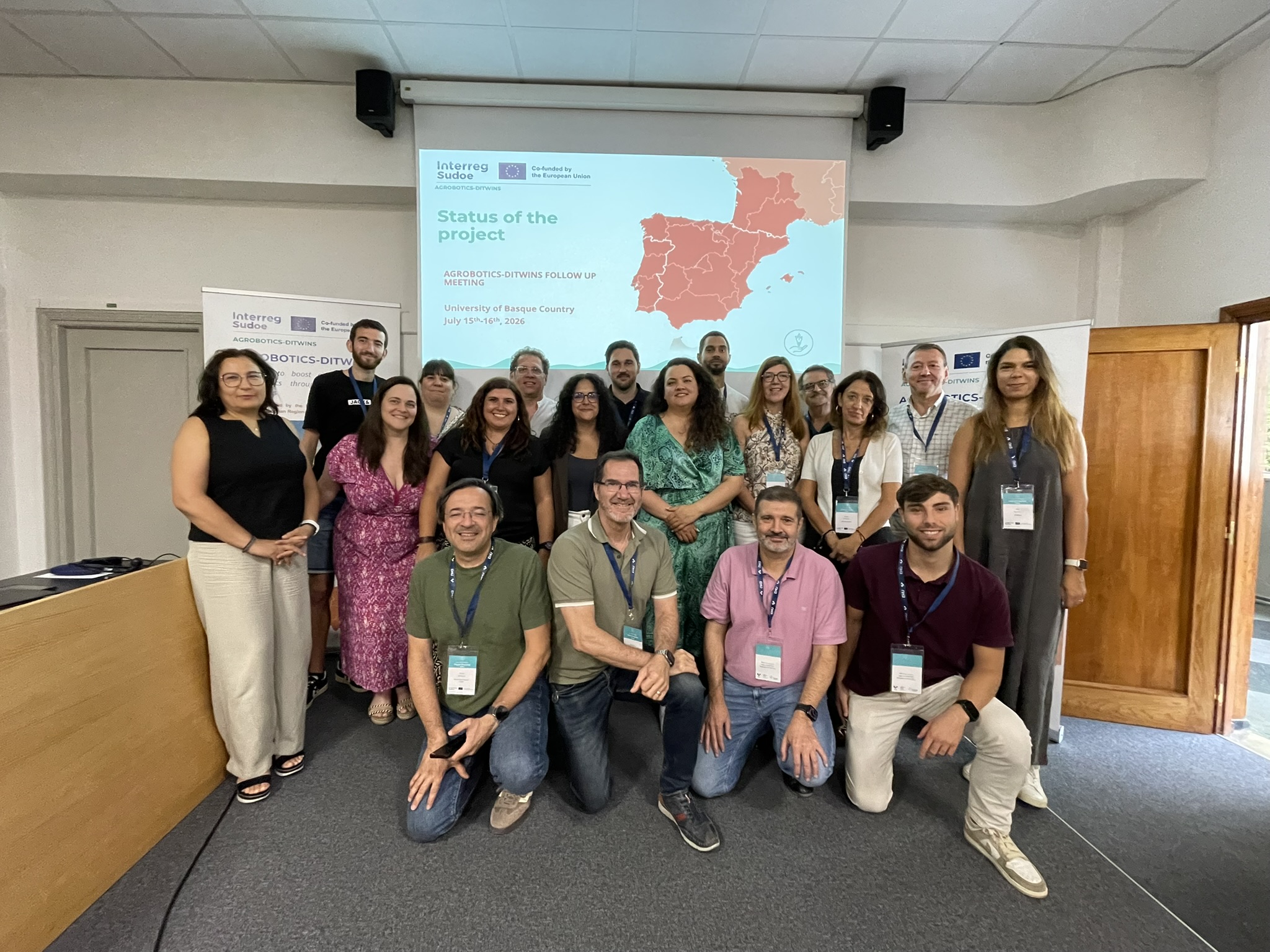
The consortium of the European Agrobotics-DiTwins project, which includes Málaga TechPark as a consortium partner, held a follow-up meeting on 15 and 16 July at the Bilbao School of Engineering of the University of the Basque Country (UPV/EHU)
Coordinated by the University of Málaga, Agrobotics-DiTwins brought together all 13 consortium partners in Bilbao to review the project’s progress and prepare for the launch of its pilot programme.
Agrobotics-DiTwins is a European initiative co-financed by the Interreg Sudoe Programme. It aims to support the uptake of robotics, artificial intelligence and digital twins among small and medium-sized agricultural enterprises. Its objective is to promote more efficient and sustainable production processes through a transnational network of Living Labs, where companies, agricultural professionals, research centres and technology providers can design and validate solutions tailored to real-world needs.
The project brings together 13 organisations from Spain, Portugal and France: the University of Málaga, the University of the Basque Country, Miguel Hernández University of Elche, the University of Huelva, the University of Algarve, the University of Limoges, Málaga TechPark, Data CoLAB, NERA – Business Association of the Algarve Region, Aquitaine Robotics, OSFARM, FI Group and ELATEC.
The Bilbao meeting took place following the completion of the project’s first phase, which focused on analysing the agricultural processes with the greatest potential for improvement through robotic and digital technologies, identifying the needs of the sector, and defining the technical specifications for the digital twins and Living Labs.
Agrobotics-DiTwins is now entering a new phase aimed at turning this preparatory work into concrete use cases. The objective is to activate the network of Living Labs, engage companies and agricultural organisations, and launch a co-creation pilot programme in which solutions can be analysed and simulated before being implemented under real-world conditions.
Over the two days, the agenda combined coordination sessions, a visit to the University of the Basque Country’s Living Lab, and working meetings on technical progress and the project’s next steps. The partners reviewed the results achieved to date and shared information on the different Living Labs, their service portfolios, and the methodologies planned to identify business needs, select use cases and support participating organisations.
Following the Bilbao meeting, the partners will continue identifying and selecting companies, defining use cases and preparing the pilot programme. Through this process, the selected organisations will work with the technical teams of the Living Labs to assess their needs, explore robotic solutions and evaluate their feasibility using digital twins.
The meeting strengthened coordination among the participating organisations and established a shared roadmap for moving from technical planning to experimentation and co-creation with companies. Agrobotics-DiTwins is therefore progressing towards the consolidation of a transnational Agriculture 5.0 ecosystem that brings technological innovation closer to the realities of the agricultural sector across the Sudoe area.