-
Gartner Peer Insights Customers’ Choice awards recognize top-rated vendors and products based on over 735,000 verified reviews and ratings.
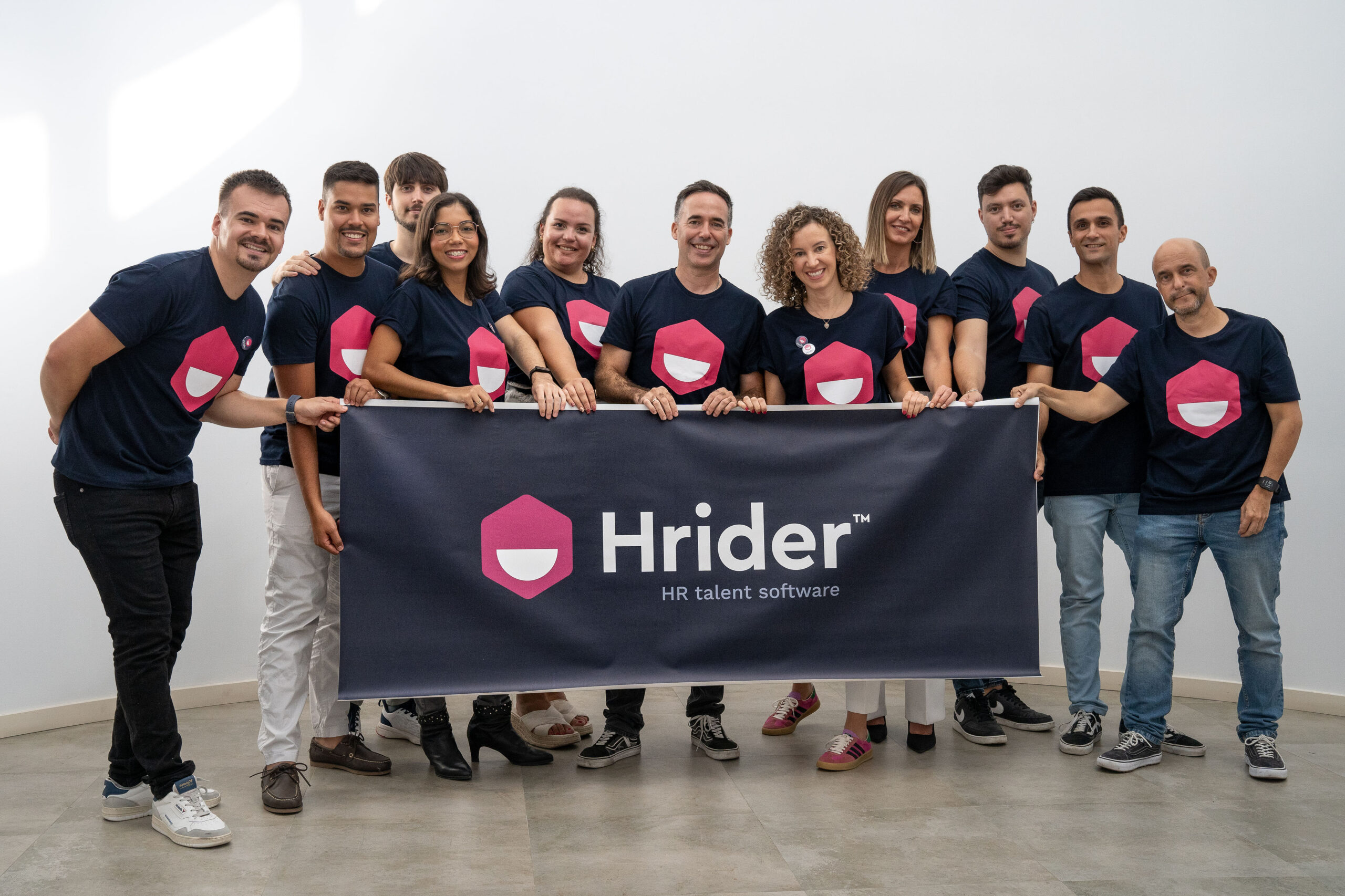
The U.S.-based leading company in research and advisory of technology and businesses, Gartner, has named Hrider the best Human Resources Software of 2025 across three platforms and five different categories. The Málaga-based startup achieved an average overall rating of 4.5 out of 5. Its recommendations have a significant impact on the industry, offering research reports and consulting services to support strategic business and technology decisions.
Hrider received:
- Front Runners 2025 distinction as Best Software in the Performance Management Systems category.
- Best Customer Support 2025 in the categories of Human Resources, Performance Management Systems, and Workforce Management.
- Category Leaders 2025: First place in Performance Management Systems.
These distinctions came from Gartner Peer Insights across Software Advice, Capterra, and GetApp, which recognize the suppliers and products most valued by their customers. The data collected is based on real user reviews of software solutions. Over 735,000 verified free reviews were analyzed by Gartner.
Being featured in this kind of research and comparison study from a firm of Gartner’s stature is highly valuable, as businesses rely on such tools to confidently select enterprise software and technology solutions. As Hrider’s Expansion Director, Miguel Illanes, explains: “Receiving these Gartner badges, based on ratings from our customers, confirms that we are creating something truly valuable for them. It’s a recognition that motivates us to keep investing in useful, approachable technology that transforms how companies manage their talent.”
Hrider‘s forecasts for this year are great, and it remains true to its philosophy of self-financing without external investment. Since its founding in 2017, the company has become the fastest-growing firm in its sector in the Spanish-speaking world, working with over 700 companies globally and managing more than 500,000 employees through its platform. In 2024, Hrider’s revenue grew by nearly 30% compared to 2023, continuing a strong trend of double-digit growth year over year.
Hrider was founded with the mission to democratize Human Resources management, making continuous improvement processes accessible to companies of all sizes (from 10 to 5,000 employees). Its technological solution specializes in measuring and managing the talent of organizations and companies that support innovation. Its software uses advanced People Analytics and AI. The platform enables goal and performance evaluations, 360º feedback, and workplace climate and culture assessments, particularly suited to medium and large organizations.
In its first year, Hrider acquired clients in five countries across multiple sectors, including Thyssenkrupp, Viajes El Corte Inglés, and Unicef. By 2018, it had 200 clients in eight countries, growing to 260 clients in ten countries by 2019, with notable additions including Admiral, ESADE Foundation, Manos Unidas, and Mr. Wonderful. During the pandemic, Hrider opted to retain its entire team without implementing layoffs or furloughs, and continued to expand as organizations sought agile digital platforms to manage remote teams. The team grew from 10 to 25 people in 2023 alone.
“We’ve created a new market segment: a specialized solution that addresses the most strategic area of Human Resources, talent management,” highlights Rocío Valenzuela, Hrider Product Manager. She also added: “Our purpose has always been to create happier companies by equipping them with new-generation technology that uses mathematical modeling to unlock employee potential and build more efficient organizations. With our People Analytics platform, accessible to companies of any size, we empower HR professionals and place people at the heart of decision-making.”
Daniel del Río, CEO and Tech Lead, emphasizes that Hrider has always focused on being a humanistic tool rather than a control tool. He explains that Hrider’s success stems from their consistent focus on product excellence, developing a solution that is fully customizable, simple to use, and tailored to each client’s unique needs.
Hrider has been bootstrapped, relying on its resources and reinvesting profits to strengthen the company, without seeking venture capital or external funding. “We’ve maintained the same company philosophy throughout the years, even during the pandemic. Our team works with a shared purpose, and everyone knows how their contribution supports our growth. That’s why we share part of our profits with employees and promote internal recognition and development,” concludes del Río.
About Hrider
Hrider is a Málaga-based company offering a specialized Talent Intelligence platform designed for companies across all industries or HR consulting firms committed to data-driven decision-making and continuous internal improvement. The platform enables performance evaluations, 360º feedback, competency and goal measurement, workplace climate and culture assessments, action plan development, and talent mapping (N-Box), now enhanced with AI. As the fastest-growing talent management solution in the Spanish-speaking world, Hrider is now used in 27 countries and manages over 500,000 employees.
In 8 years, it has reached over 700 corporate clients, including notable names such as Eurofirms, Saint Gobain, Anaya, Cabify, Viajes El Corte Inglés, Codorníu, BricoDepot, Unicef, Pastas Gallo, University of Alicante, Textron Aviation, JC Decaux, GoFit, Marbella Club, and Hospital del Mar. These are all companies interested in implementing systems to measure their results and support their collaborators’ professional development.
Its cloud-based solution requires no installation and allows for unlimited evaluations and surveys, promoting continuous feedback processes that support data-informed decision making. Flexible, customizable, powerful, and user-friendly, it is designed to make continuous improvement accessible to companies of all sizes (from 10 to 5,000 employees) that were once a privilege reserved only for multinational corporations.